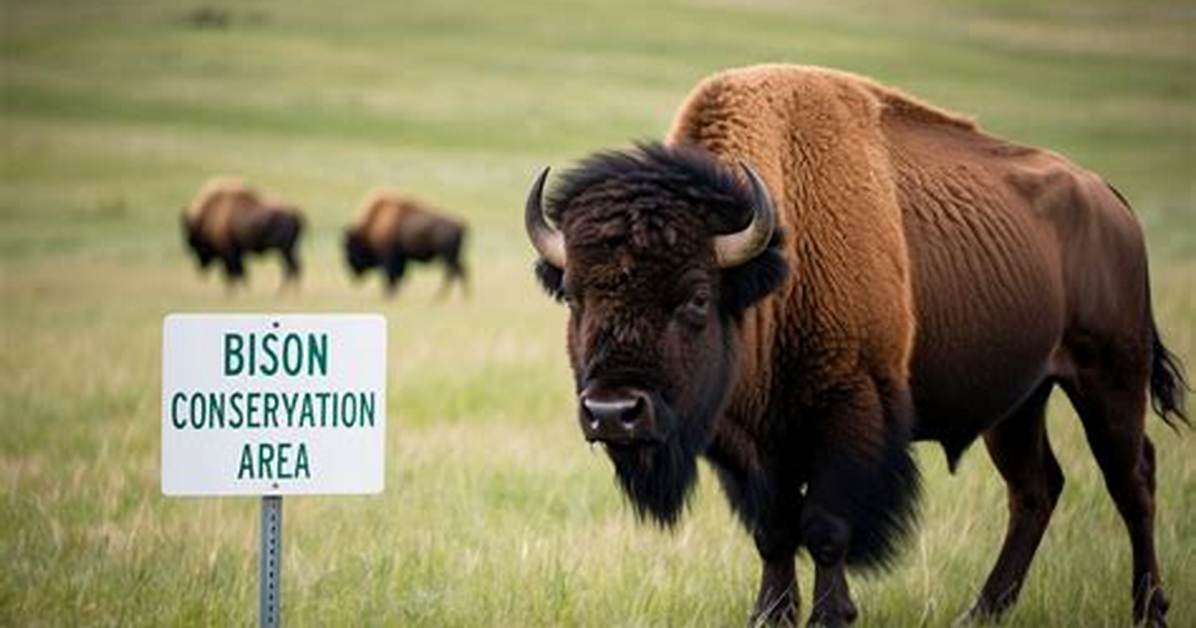
It's a question that often sparks curiosity, much like trying to unravel other persistent puzzles in life. For generations, many of us grew up using the terms "bison" and "buffalo" interchangeably. We'd see majestic creatures roaming the plains and instinctively call them buffalo, a name deeply embedded in American culture and history. But if you listen closely to naturalists, zoologists, and even park rangers today, they'll almost exclusively use the term "bison." So, what gives? Why is it that these terms, seemingly synonymous, are now treated with such distinct precision? Is it a recent change, or have we been getting it wrong all along? This article delves into the fascinating reasons behind this linguistic distinction, exploring the scientific facts, historical context, and why one name ultimately became more accurate than the other.
The Heart of the Confusion: Bison vs. True Buffalo
To understand why bison are no longer (or rather, were never truly) "buffalo," we need to look at the scientific classification. The animal native to North America, and indeed Europe, is correctly identified as a bison. There are two main species: the American bison (Bison bison) and the European bison or wisent (Bison bonasus). These magnificent bovines are characterized by their large humps over the front shoulders, massive heads, and shaggy coats, particularly around the head and neck. They are built for colder climates and grazing on vast grasslands.
Geographical Roots and Scientific Classification
True buffalo, on the other hand, belong to a different genus entirely. The term "buffalo" scientifically refers to two distinct groups of bovines found in Africa and Asia: the African buffalo (Syncerus caffer), also known as the Cape buffalo, and the Asian water buffalo (Bubalus bubalis). These animals have different physical characteristics. African buffalo have large, often curved horns that fuse across the top of their heads, and they lack the prominent shoulder hump of the bison. Water buffalo have wide, sweeping horns and are typically found near water sources, often semi-aquatic in their habits. Their physical differences are quite stark when compared side-by-side, making the scientific distinction clear.
A Journey Through History: How the Name "Buffalo" Stuck
So, if they're scientifically different, why did Americans start calling bison "buffalo" in the first place? This is where history and linguistic evolution come into play. It's a bit like asking why certain strategies or terms become entrenched – sometimes, a simpler, perhaps less accurate, path gets adopted and becomes a long-standing habit.
The Early European Encounters
When early European explorers and settlers arrived in North America, they encountered the vast herds of what we now know as bison. Lacking a precise term for these animals in their own languages that accurately described them, they often used terms that were familiar to them. Many French explorers referred to them as "bœufs," meaning ox or bull. Over time, this term, or perhaps a corruption of it, evolved into "buffalo" in English. It was a common practice to name new discoveries after something vaguely similar from the Old World. For instance, the American robin is not the same species as the European robin, but the name stuck due to a superficial resemblance.
The Enduring Popularity of "Buffalo"
The name "buffalo" quickly gained traction and became the common vernacular. It was used in everyday conversation, in historical accounts, and in popular culture. This widespread adoption meant that even as scientific understanding progressed, the popular term remained firmly in place. It's a phenomenon that can be compared to how certain narratives persist, even when the facts might suggest otherwise. It's been like this for centuries now, seemingly unaffected by new information or changing scientific consensus.
Furthermore, the term "buffalo" became intertwined with the American identity, especially concerning the Wild West and the frontier. Iconic imagery, historical events like the buffalo hunts, and even place names (like Buffalo, New York) solidified its place in the American lexicon. Compared to other linguistic curiosities, the "buffalo" misnomer runs pretty deep in American historical and cultural consciousness, making it incredibly hard to dislodge. It’s a connection that feels almost like a heritage, whether scientifically accurate or not, much like the connection via family heritage that binds certain traditions.

